Tripe: Rules, Demo Access & Play Guide | ph777 game
Tripe is listed as a cards title in the ph777 game catalogue. Its exact round rules and available options should be confirmed in the active game's own help and settings, not guessed from the name or artwork.
For a first visit, identify the controls, check whether a Tripe Demo is actually offered, and decide on a comfortable time and spending limit before proceeding.

Check that the loaded title matches Tripe, then review its own instructions before making a choice.
Other card games alongside Tripe
These catalogue choices are separate titles rather than Tripe guide pages. Their artwork identifies each listing; use the site's game action if you choose to explore one.


What should you know about Tripe?
Direct answer: Tripe is a cards-category game listing, but the catalogue alone does not establish how a hand is formed, what wins, or whether a free mode is available. Read the active title's rules and displayed settings to answer those questions accurately.
This distinction matters because similarly presented card games can use different terminology, turn sequences and result conditions. The ph777 game Tripe listing is a starting point for finding the title; the game itself is the source for its current mechanics.
- What is confirmed: the displayed name is Tripe, and its catalogue category is cards.
- What needs checking: objective, turn order, any card-combination ranking, controls and stake choices.
- What is not promised: a particular outcome, payout, return, or guaranteed way to win.
If you need general details about the platform before opening a game, read About Ph777 Game. Treat account access and game rules as separate questions: a familiar ph777 game link does not by itself verify a round's terms.
Visual references for Tripe and nearby listings
The local artwork below is useful for recognising catalogue tiles, not as proof of in-round visuals. No gameplay screenshot is implied: confirm the live screen, labels and controls after opening the title.
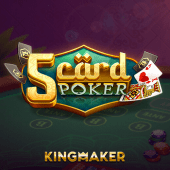
5 Card Poker: a separate catalogue illustration. Do not assume its rules apply to Tripe.

Cards Hi Lo: another listing reference, not a screenshot of a Tripe round.
When the active game loads, compare its title and visible instructions with the listing you intended to open. If the image, name or interface appears inconsistent, pause rather than entering account or payment details.
A careful way to start a Tripe session
Start by verifying the rules and options. Since the listing does not specify Tripe's mechanics, use the current in-game instructions rather than a generic card-game strategy.
- Confirm the title: check that the loaded page identifies the game as Tripe and that the listing is the one you selected.
- Find the help or rules panel: read the objective, any sequence of actions and the meaning of symbols or controls shown in the active game.
- Review settings: understand the displayed options, stake amount and any confirmation step before you proceed.
- Check for a demo: a Tripe Demo is relevant only if the current interface clearly offers a demo or practice mode. Do not treat its availability as guaranteed.
- Set your boundary first: choose a time limit and an entertainment budget you can afford to lose; do not use money needed for essentials.
- Make a deliberate decision: continue only when the rules are clear and the session still fits your plan.
- Stop as planned: leave at your pre-set limit. A recent result is not evidence that another outcome is due.
A practice mode can help with navigation if the game explicitly supplies one, but it cannot predict results in paid play. For issues unrelated to a game's instructions, use the ordinary site navigation and consult its platform information rather than guessing from this guide.
Build a measured approach to Tripe
The most useful strategy begins with information and limits, not a prediction. Until you have read Tripe's own rules, avoid applying tactics from another card title. Once you understand the interface, keep each decision consistent with a pre-set recreational plan.
Separate rules from assumptions
Write down or mentally confirm what the game says about its objective, legal actions and result display. A title's artwork or category is not enough to infer a hand ranking, a special card, or a bonus condition. If a term is unfamiliar, pause and locate its explanation before continuing.
Use boundaries you can keep
Decide in advance how long to play and how much entertainment spending is acceptable. Avoid increasing stakes to recover a loss, borrowing to continue, or treating a short run of outcomes as a reliable pattern. Leave when the limit arrives, whether the recent result was positive or negative.
Protect the account and the session
Use a route you recognise, keep credentials private and read applicable terms before any transaction. Search interest in a ph777 game link or ph777 game payments should lead to verification of the address and current payment information—not to assumptions about processing times or available methods.
If play stops feeling recreational or becomes difficult to control, step away and seek appropriate support. No technique can remove the uncertainty inherent in a chance-based game.
What a Tripe Demo can and cannot tell you
A Tripe Demo can be useful for learning navigation only when the active title explicitly provides that option. The catalogue does not confirm a demo mode, so check the game screen rather than expecting a free-play button.
If available, a demo may let you find controls, read prompts and understand the order in which the interface asks for actions. Take time to inspect rather than tapping through unfamiliar screens.
Practice results do not establish future paid results, a winning pattern, a payout rate or the likelihood of a bonus. Do not use a demo run as a reason to raise a budget.
When no demo is shown, read the information panel and decide whether the available instructions are sufficient. You can always leave without starting. Access details, payment options and account steps can change, so check the current on-screen terms before taking action.
For a different catalogue experience, you can explore Lucky Fortunes. It is a separate title; compare its own published rules and options instead of carrying assumptions from Tripe into another game.
Compare Tripe with other choices by what matters
Compare verified features, not names or imagined odds. The cards label tells you how Tripe is grouped in the catalogue; it does not establish its detailed rules. Use the same practical questions for each title before choosing.
| What to compare | What to verify in Tripe | Why it helps |
|---|---|---|
| Instructions | Objective, action sequence and result explanation | Prevents borrowing rules from another game |
| Controls | Meaning of each button and confirmation step | Reduces accidental selections |
| Practice | Whether a demo option is explicitly available | Sets realistic expectations before opening |
| Session fit | Displayed choices, time needs and your own limit | Keeps play within a planned budget |
| Account and payments | Current terms, methods and transaction conditions | Avoids assumptions about access or processing |
When comparing Tripe with 5 Card Poker, Cards Hi Lo, Coin Pusher or Coin Toss, treat each as a distinct listing and review its own instructions. Do not infer that shared catalogue placement means shared mechanics. To return to the full starting point, visit the ph777 game Index.
No RTP, volatility, payout schedule or special feature is established for Tripe by its catalogue record. If the active game or applicable terms do not clearly provide a detail, leave it unassumed.
Make your Tripe decision with a quick checklist
A good decision is one you can make with the information in front of you and within limits you chose beforehand. Before continuing, check each point:
- The game screen identifies the title as Tripe and matches the listing you intended to open.
- You have read the current rules and know what its controls and displayed settings mean.
- You checked whether a Tripe Demo is actually offered rather than assuming it exists.
- You understand the relevant access and transaction terms before providing account or payment information.
- Your planned time and entertainment budget exclude money needed for rent, food, bills or other essentials.
- You are comfortable stopping now and will not chase a loss or keep playing under pressure.
If any answer is unclear, pause and review the active game's information. The ph777 game Tripe listing can help you find the title, but only current on-screen instructions can clarify its mechanics. Play is for adults meeting the legal requirements in their location; gambling involves risk and no outcome is guaranteed.